
On this page
What a cataract is
A cataract is one of the most common causes of vision loss in the world, especially in people over 50. Today, cataract surgery is about more than removing a cloudy lens. With modern techniques and a lens chosen for your needs, the aim is sharper vision, a faster recovery and less dependence on glasses.
Inside your eye, behind the coloured iris, is a natural lens. In a healthy eye it is clear and focuses light on to the retina, the light-sensitive layer at the back of the eye. With age and other factors, proteins in the lens break down and clump together. The lens turns cloudy, and your vision becomes blurred. That cloudiness is a cataract.
Cataracts usually develop slowly and may affect one or both eyes. Over time they make everyday things harder: reading, driving, watching television, using a mobile phone, even recognising faces.
Once a cataract is affecting your sight, medicines, eye drops, diet or new spectacles cannot clear it. Surgery is the only effective treatment.
What causes cataracts
Ageing is the most common reason, but other factors play a part:
- Age: the most common type develops naturally as we get older.
- Diabetes: people with diabetes often develop cataracts earlier.
- Sunlight: long-term exposure to UV light without eye protection can increase the risk.
- Steroids: long-term steroid use can speed up cataract formation.
- Eye injury: a previous injury can lead to a cataract.
- Smoking and alcohol: smoking and heavy drinking may increase the risk.
- Family history: some people inherit a tendency to early cataracts.
Protecting your eyes with UV-blocking sunglasses, keeping diabetes under control, not smoking, eating a healthy diet and having regular eye check-ups can help slow a cataract, even though it cannot always be prevented.
Symptoms of cataract
Many people first notice that their spectacles seem to become weak again and again. The real cause may be a cataract that is slowly getting worse. Other signs include:
- blurry or cloudy vision
- glare and sensitivity to bright light, or halos around lights
- poor vision at night
- colours that look faded or yellowish
- frequent changes in your spectacle number
- double vision in one eye.
When cataract surgery should be done
Surgery is recommended when a cataract starts to affect your daily life. You may need it if:
- your vision is blurry even with spectacles
- driving is difficult, especially at night
- reading has become uncomfortable
- glare from lights is getting worse
- your work or daily tasks are affected
- the cataract is getting in the way of examining or treating your retina.
It is wise not to put surgery off unnecessarily. A very mature cataract can be harder to remove and makes surgery more complex. Leaving a cataract too long can also lead to serious loss of vision, falls in older people, difficulty driving, loss of independence and inflammation in the eye. Treating it earlier usually means clearer vision sooner and a smoother recovery. Our article on when a cataract operation is required covers this in more detail.
Your consultation and tests
A cataract is diagnosed through a full eye examination by an ophthalmologist. This may include:
- a visual acuity test, reading letters on a chart to measure how clearly you see
- a slit-lamp examination, using a special microscope to look at the lens and inside the eye
- a retinal examination, checking the back of the eye after widening the pupil with drops
- an eye pressure test, to look for related conditions such as glaucoma.
If surgery is advised, we then:
- assess how severe the cataract is and how healthy the rest of your eye is
- take detailed measurements of the eye
- help you choose the most suitable intraocular lens (IOL)
- review your medical history and medicines
- carry out basic tests so that surgery is safe for you
- explain the pre-operative instructions clearly.
How modern cataract surgery works
Phacoemulsification
In phacoemulsification ("phaco"), ultrasound energy breaks the cloudy lens into tiny pieces, which are then removed through a small opening. This means smaller cuts, faster healing, minimal bleeding, a lower risk of infection and better vision afterwards.
MICS: micro-incision cataract surgery
We specialise in MICS, in which the cataract is removed through ultra-small incisions. Its advantages include:
- a smaller wound, with no stitches in most cases
- faster healing and faster recovery of vision
- a lower risk of infection
- less astigmatism caused by the surgery
- minimal discomfort
- a more stable wound.
Most patients get back to their normal routine quickly.
Image-guided cataract surgery
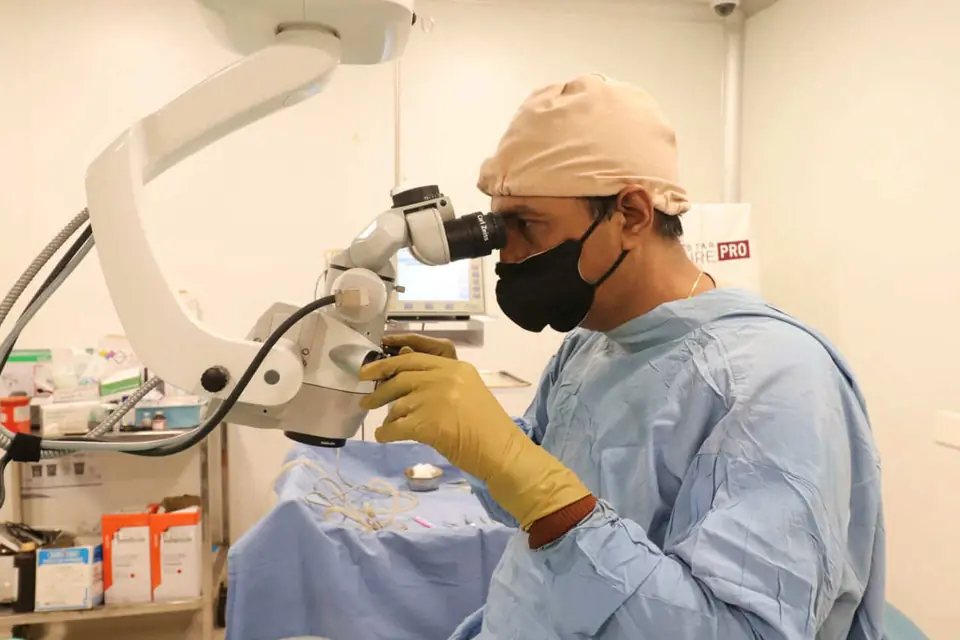
We perform image-guided cataract surgery. Before the operation, a digital system captures detailed measurements of your eye and creates a map for planning the surgery. During the operation, it guides the surgeon in real time.
This helps with precise placement of the incision, accurate positioning of the new lens and correction of cylindrical power (astigmatism). It also avoids errors from marking the eye by hand. It is especially helpful for premium lenses and for toric lenses, which must be lined up very accurately.
Modern phaco systems also control the fluid and pressure inside the eye during surgery. This protects the cornea, reduces the ultrasound energy needed and makes removing the cataract smoother.
On the day
Cataract surgery is usually a day-care procedure, and most patients feel little or no discomfort.
- Final checks: your eye is examined and measured.
- Anaesthesia: numbing drops or a local anaesthetic keep you comfortable.
- Removing the cataract: the cloudy lens is removed with phacoemulsification.
- Placing the new lens: an artificial intraocular lens (IOL) is placed permanently inside the eye.
- Going home: most patients go home the same day.
The surgery itself usually takes around 10 to 20 minutes.
Choosing your intraocular lens (IOL)
The lens you choose directly affects the quality of your vision after surgery, so it is one of the most important decisions you will make. We consider your age, lifestyle, work, reading habits, driving, screen use, any astigmatism, your budget and how much you want to be free of glasses.
| Lens | What it gives you | Often chosen by |
|---|---|---|
| Monofocal | Clear vision at one distance, usually far or near. Sharp, with minimal glare or halos, and a long, proven track record. Usually the more affordable choice. | Patients happy to wear glasses for some tasks |
| Trifocal | Vision at distance, intermediate (computer) and near (reading) ranges | Patients who want the most freedom from glasses |
| EDOF (extended depth of focus) | A continuous range of focus: excellent distance, strong intermediate and useful near vision, with smooth transitions | Patients who put natural visual quality and night driving first |
| Toric | Corrects astigmatism (cylindrical power) caused by an unevenly curved cornea | Patients with astigmatism who want sharper vision and less need for cylindrical glasses |
Monofocal lenses remain among the most commonly implanted lenses worldwide. Trifocal lenses help with reading, computer work and mobile phone use without glasses. EDOF lenses can mean better night driving, less glare and halos, and good contrast. Our cataract specialists examine your eyes and talk you through every option before surgery, so that you can make the right choice.
Recovery and aftercare
Most patients notice a clear improvement in vision within a few days, although complete healing may take a few weeks.
- Use the prescribed eye drops regularly.
- Do not rub or touch the operated eye.
- Wear protective glasses if advised.
- Avoid heavy lifting for a few days.
- Keep water away from the operated eye at first.
- Attend all your follow-up visits.
Cataract surgery at Sanjivani Eye Hospital
Cataract surgery is available at both our centres in Ahmedabad, Navrangpura and Saraspur. Surgery is led by Dr. Rajesh Shah, MBBS, MS (Ophthalmology), our chief eye specialist and a cataract and refractive surgeon with over 30 years of experience. Our team has performed more than 1,00,000 phaco cataract surgeries and over 1,000 premium IOL surgeries.
Every patient has a personal evaluation and lens plan, and we follow strict hygiene and safety protocols in the operation theatre. For more on how cataract care has changed, read our article on advanced cataract surgery in Ahmedabad.